 Hammer & Hoe
Raised Garden Beds for Beginners: Size, Soil and What to Plant
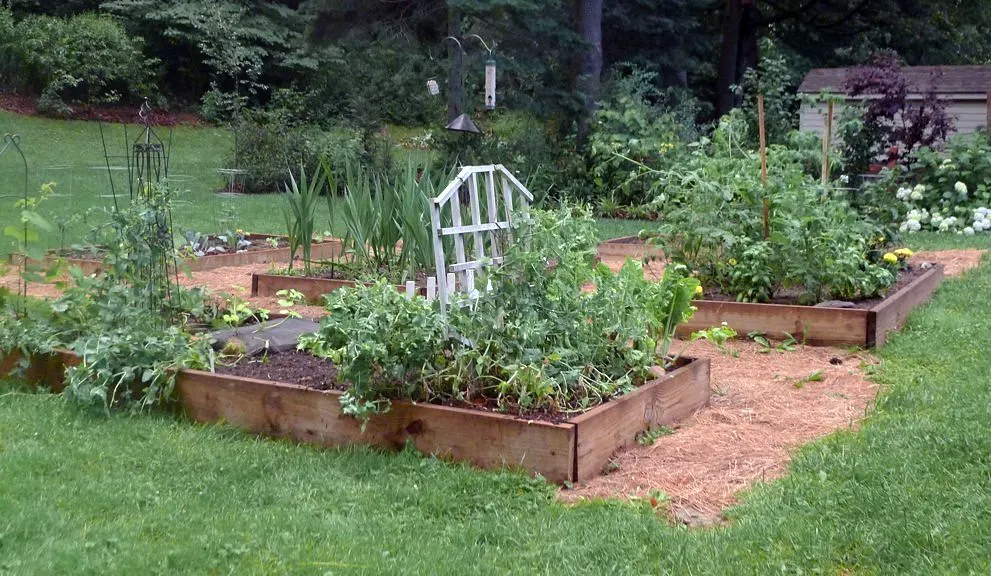
Raised beds are the easiest way to start growing vegetables. They warm up earlier in spring, drain well, keep paths separate from growing space and let you fill them with good soil instead of fighting whatever is in your yard.
Choose the right spot
Most vegetables need 6 to 8 hours of direct sun a day. Watch your yard over a full day before deciding. Pick a level spot close to a water source. Beds close to the house get checked, watered and harvested far more often than beds at the back of the lot.
Size it so you never step inside
- Width: no more than 4 feet if you can reach from both sides, or about 3 feet against a fence or wall.
- Length: whatever fits, though 8 feet is common because lumber comes in 8-foot lengths.
- Height: 10 to 12 inches is enough for most vegetables. Go 24 inches or more if bending is difficult.
- Paths: leave at least 18 to 24 inches between beds, or about 36 inches if you'll use a wheelbarrow.
Materials
Untreated cedar is the classic choice: naturally rot-resistant and likely to last many years. Galvanized steel beds are long-lasting and quick to assemble. Modern pressure-treated lumber is generally considered safe for gardens, but many gardeners prefer to line it or avoid it for edibles. Avoid old railroad ties, which may contain creosote.
Fill it with the right soil
A simple, proven mix is roughly 60% topsoil, 30% compost and 10% aeration material such as perlite or fine bark. Don't fill raised beds with straight garden soil, which compacts, or bagged potting mix alone, which is expensive at this volume and dries out quickly. A 4×8-foot bed that's 12 inches deep holds about 32 cubic feet, or about 1.2 cubic yards. Calculate your exact amount with our soil calculator. Buying in bulk by the yard is usually much cheaper than bags for more than one bed.
What to plant first
- Cool season (early spring and fall): lettuce, spinach, radishes, peas, kale and carrots.
- Warm season (after your last frost): tomatoes, peppers, zucchini, bush beans, cucumbers and basil.
- Easy wins for beginners: bush beans, zucchini, cherry tomatoes and leafy greens.
Look up your USDA hardiness zone and average last frost date to time your planting. Top each bed with 2 to 3 inches of fresh compost every year, and mulch the surface to hold moisture and suppress weeds.
Prices are typical U.S. ranges and vary by region, home and contractor. Always get several local quotes and follow local building codes; hire a licensed professional for electrical, gas and structural work.
Keep reading
How to Get a Thicker, Greener Lawn: A Season-by-Season Plan
Overseeding, mowing height, watering and fertilizer timing for cool-season and warm-season grasses, so your lawn fills in and crowds out weeds.
How to Grow Tomatoes: From Planting to a Big Summer Harvest
Sun, soil, spacing, watering and support: a practical guide to growing healthy tomato plants and avoiding common problems like blossom end rot and split fruit.
Composting at Home: A Simple Guide That Actually Works
What to put in your compost, the right mix of browns and greens, how to fix a smelly or slow pile, and when your compost is ready to use.